
Ski holidays, diving trips and trekking routes share something with insurance companies: everyone involved knows that accidents are more likely than on a week by the pool. As a result, many standard travel policies either exclude adventurous activities or include only a limited list of them, and offer extra cover for the rest.
This guide explains how that usually works, in general terms. Policies differ widely, and the only reliable answer for your trip is in your own policy document.
Why activities are treated differently
The medical section of a travel policy is designed around everyday risks: an illness, a fall on a pavement, a stomach bug. A ski crash, a decompression problem after a dive or a fall on a mountain path is more likely to need specialist treatment, a rescue, or a flight home with medical staff. Those costs can be very large.
Insurers manage this in a few common ways:
- A list of activities included as standard, often low-risk ones such as swimming or walking on marked paths.
- A longer list available with extra cover, sometimes in bands or grades.
- A list of activities excluded altogether, often including things like mountaineering with ropes or certain motor sports.
If your activity is not mentioned anywhere, do not assume it is covered. Ask the provider in writing and keep the reply. The guide to what travel insurance usually covers explains the wider structure of a policy.
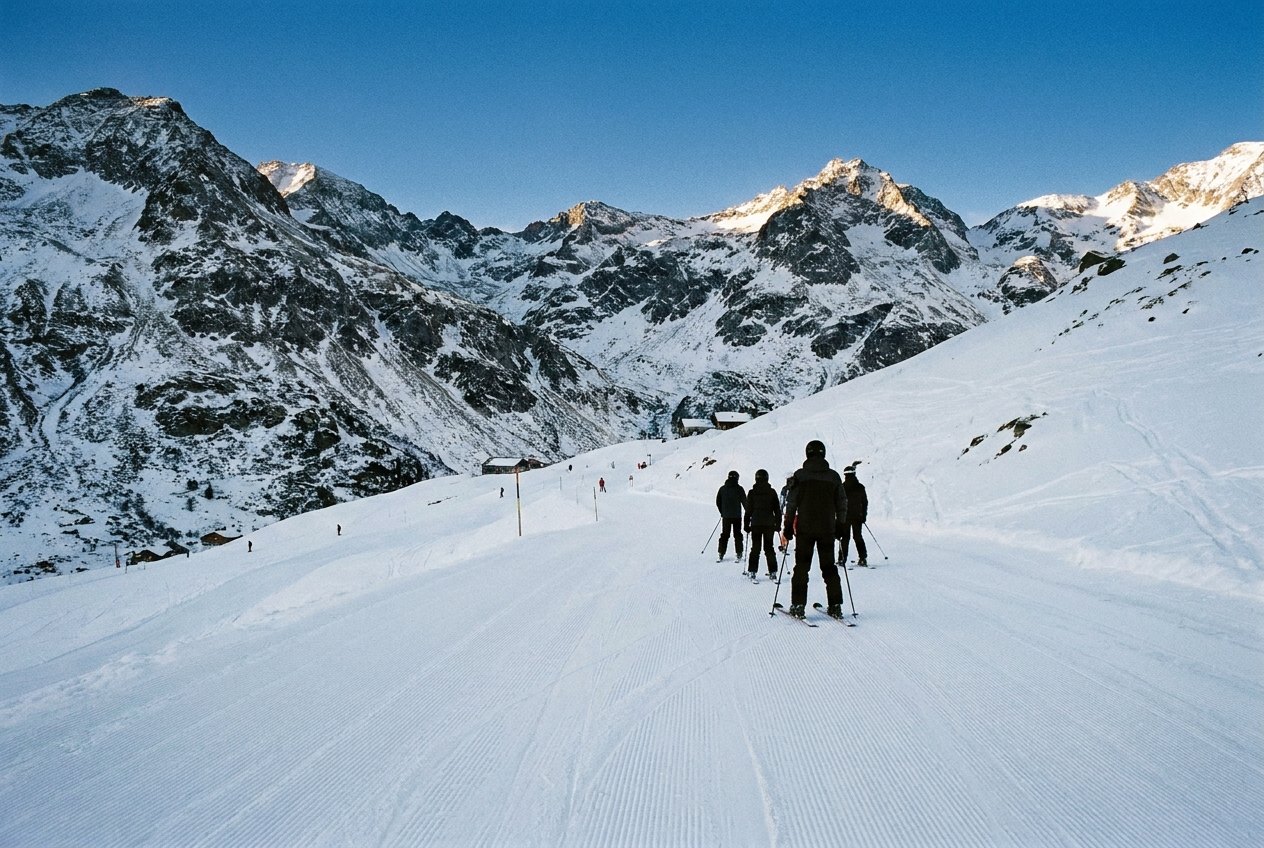
Skiing and snowboarding
Winter sports cover is often sold as a separate add-on. It may include things beyond medical costs, such as lost ski passes, hired equipment, or days lost to piste closures, but the details vary.
A few points come up in many policies:
- Off-piste skiing. Some policies cover skiing off marked runs only with a qualified guide, or only within resort boundaries; others exclude it entirely.
- Helmets. Some policies expect a helmet to be worn, and a claim for a head injury without one may be affected. Wearing one is sensible regardless.
- Alcohol. Accidents linked to drinking are commonly excluded, which matters in resorts where lunch and the slopes are close together.
- Piste rules. Ignoring closed-run signs or local safety instructions can affect a claim.
Within Europe, a GHIC or EHIC may give access to state healthcare, but many resort clinics are private, and rescue from the slopes is often charged separately. The guide to health cards in Europe explains why a card is not a substitute for travel insurance.
Diving and other water sports
Diving cover usually depends on two things: your qualification and the depth you dive to. Many policies cover diving only up to a stated depth, and only within the limits of your certification or under the supervision of a qualified instructor. Diving alone, beyond your training or deeper than the stated limit can fall outside cover.
Related guide Cruises and remote destinations
Decompression illness can need treatment in a hyperbaric chamber, which may be far from where you are diving. Check whether the policy covers getting you there. Carry your certification card and logbook, since they may be asked for after a claim.
Diving also brings health questions that only a professional can answer. Some medical conditions affect fitness to dive, and many dive centres ask you to complete a medical form. If you have any doubt, speak to a doctor before the trip, ideally one familiar with diving medicine. Flying soon after diving carries its own risk; follow the guidance you were given in training and by your dive centre.
Other water sports, such as jet skiing, kitesurfing or white-water rafting, are each treated differently. Look for the exact activity by name.
Trekking, altitude and mountain rescue
Walking on marked paths is often included as standard, but many policies set an altitude limit, above which trekking needs extra cover. Climbing with ropes, glacier travel and some via ferrata routes may need a specialist policy.
Altitude itself is a health matter. Altitude sickness can affect fit, healthy people, and it can become serious. A doctor or travel clinic can explain how to ascend gradually and what symptoms to watch for; the guide to food, water and heat touches on this too.
Mountain rescue arrangements vary between countries. In some places rescue is free; in others, helicopter rescue is charged to the person rescued and can be very expensive. Many policies cover search and rescue only up to a set amount, and some cover rescue but not search. Read that line carefully if you are heading into the hills.
Hired equipment, guides and organised trips
If you hire equipment, check whether damage or loss is covered by your policy or needs separate insurance from the hire firm. Activity providers sometimes include their own cover, but it is often limited to liability and may not pay your medical costs.
Booking through a qualified guide or a recognised school can matter in practice. Some policies require it for certain activities, and an experienced guide also lowers the chance of needing to claim at all.
Before you set off
- List every activity you might do, including ones you will only try if the weather allows.
- Find each one in your policy and note any grade, depth, altitude or supervision condition.
- Add extra cover where needed, before you travel.
- Check the medical, rescue and repatriation limits for those activities.
- Pack your helmet, certification cards and logbooks.
- Save the emergency assistance number on your phone and on paper.
Adventure trips are among the most rewarding kinds of travel. A little reading beforehand means that if the day goes wrong, the paperwork does not make it worse.