
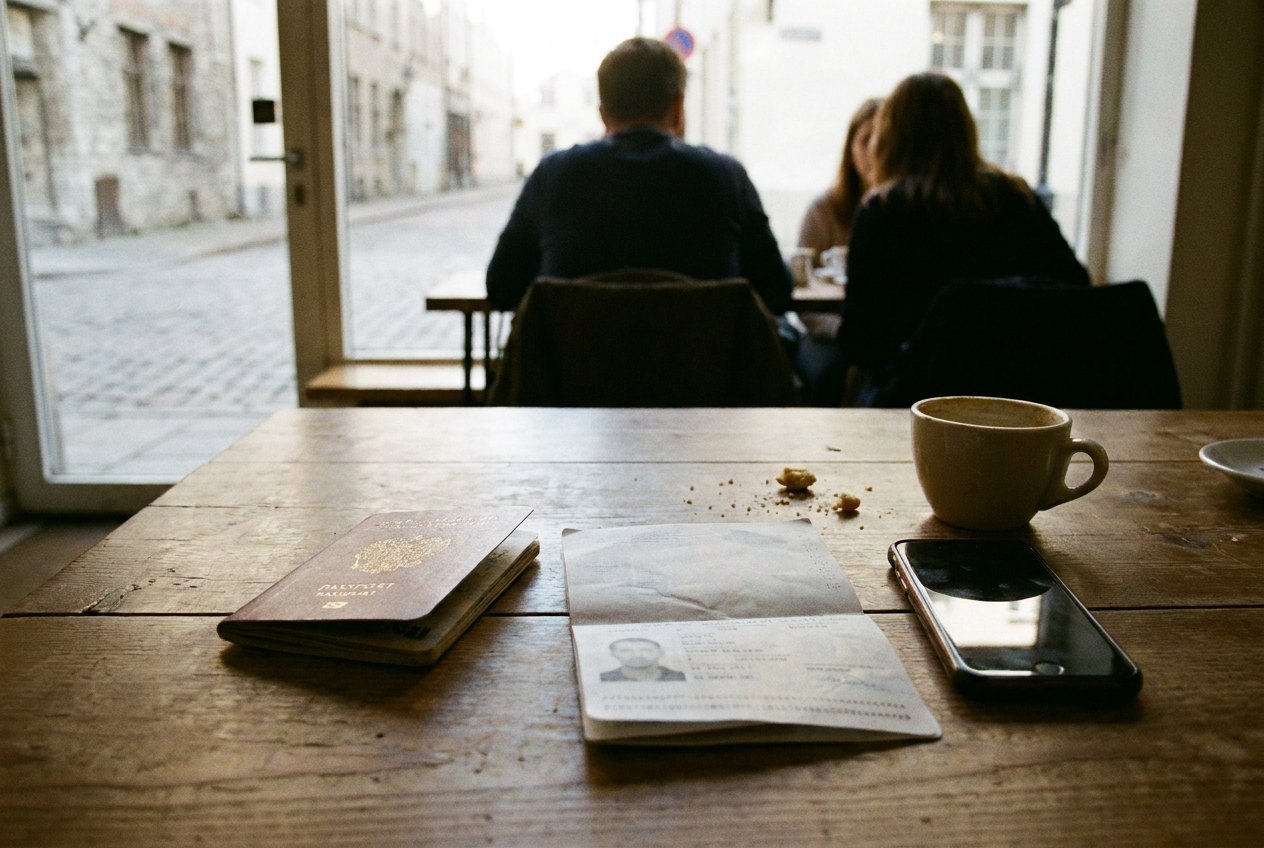
The moment you realise your passport has gone is one of the worst feelings in travel. Your identity, your ability to fly home and your next border crossing all seem to vanish with it. Yet this happens to many travellers every year, and governments have long-established ways to help. Knowing the order of steps makes the first day much easier.
This guide is general information. Procedures differ between countries.
First, make sure it is really lost
Before you start reporting, take a few minutes to look properly. Retrace your steps, check every pocket and bag, and ask at the places you have been: the hotel desk, the restaurant, the taxi company, the station lost property office. Passports are often handed in.
If it was clearly stolen, for example in a bag snatch, move straight on. The guide to common scams and theft covers what to do about other items taken at the same time.
Report it to the police
Report the loss or theft to the local police and ask for a written report or reference number. You are likely to need it for several purposes:
- Applying for an emergency travel document or replacement passport.
- Making a claim on your travel insurance, which usually requires a police report for theft.
- Showing officials at the airport or border if questions arise.
In some places a tourist police office handles reports from visitors and may have staff who speak English. Ask at your accommodation where to go. Keep the report safe and photograph it.
Report the passport as lost or stolen to your government
Most governments ask you to report a lost or stolen passport so it can be cancelled. Once cancelled, it cannot be used for travel even if you find it again, so do this after you are sure it is gone. Cancelling it protects you against someone else using it.
For UK passport holders, reporting and applying for an emergency travel document are usually done online through the official government website. Other countries have their own processes; your embassy or consulate can tell you what applies.
Related guide The documents checklist: copies, cards and contacts
Contact your embassy or consulate
Your country's embassy, high commission or consulate is the place for help with passports abroad. Its details are on your government's foreign-office website. Consular staff can usually explain your options, tell you what documents to bring and, in some cases, help in other ways, such as contacting family.
If your own country has no embassy or consulate where you are, other arrangements may apply. EU citizens, for example, can generally seek help from the embassy or consulate of any other EU country in a place where their own country is not represented.
What consular staff cannot usually do is pay your bills, give legal advice or get you out of an official procedure. Their role is to help you help yourself, and to step in for those who are most vulnerable.
Emergency travel documents
If you need to travel before a new passport could arrive, you can usually apply for an emergency travel document. This is a temporary document that lets you make a specific journey, typically home or to your country of residence, sometimes with stops on the way. It is normally valid only for that journey and for a short period.
Applications usually ask for:
- A recent passport-style photograph meeting the official requirements.
- Your travel plans, including dates and route.
- The police report or reference, if you have one.
- Proof of identity, which is where copies of your passport become very useful.
- Payment of a fee.
Some countries you might pass through or visit do not accept emergency travel documents for entry, which can limit the route home. If you were partway through a longer trip, you may need a full replacement passport to continue.
Other things to cancel or replace
If your passport was stolen with a wallet or bag, deal with the rest promptly:
- Call your bank or card provider to cancel any cards taken. Keep their emergency numbers somewhere separate from the cards themselves.
- Change passwords if a phone or laptop was taken, and use any remote lock or wipe service your device offers.
- Tell your travel insurer, and ask what they need for a claim.
- If a visa or residence permit was in the passport, ask the issuing authority about replacing it.
- If your driving licence was taken, report it to the issuing authority at home.
Rebooking flights after missing them because of a lost passport may or may not be covered by your policy. Read the section on personal documents and ask the insurer; the guide to what travel insurance usually covers explains the usual structure.
Ten minutes at home
A few minutes of preparation at home makes all of the above simpler:
- Photograph the photo page of your passport and store it securely online and on your phone.
- Carry a paper photocopy in a different bag from the passport.
- Pack one or two spare passport photos.
- Save your embassy's contact details and your insurer's assistance number.
- Keep the passport in a hotel safe or a secure inside pocket rather than a back pocket or open bag.
The documents checklist gathers these steps with the other papers worth copying. With the copies in hand and the right numbers saved, a lost passport becomes a bad day rather than a ruined trip.